




Fraud Alert!
We are experiencing an increase in fraud. FCCU will never contact you and ask for your online banking username, password, security code, or one-time verification code. We will also never ask you to grant remote access to your computer, phone, or other device.
If you receive a call, text, email, or message from someone claiming to be FCCU and you do not recognize the individual or feel uncomfortable, hang up immediately and contact your local branch directly using a trusted phone number.
Protect Your Identity with IDSafeChoice.

Stay Informed
Stay up to date and learn more about identity theft and fraud.

Enroll Online
Get IDSafeChoice added to your account conveniently online today.
Stay Protected
IdSafeChoice can help keep your digital information safe and protected.
IDSafeChoice
Identity theft is the Federal Trade Commission’s top consumer complaint, and massive data breaches continue to put everyone at risk no matter your age, income or how careful you are. Restoring your identity alone can be overwhelming, often leading to long-term damage like fraudulent bills, collections, credit issues and even criminal records.
That’s why First Community Credit Union has partnered with IDSafeChoice to offer comprehensive identity theft research, remediation and recovery all for just $3 a month for checking accountholders.
Included Services
- Fully managed identity theft research, remediation, and recovery
- Personal recovery advocate will assist in placing fraud alerts at the three major credit bureaus
- Review your credit reports and other records to identify the extent of fraudulent activity
- Re-mediate fraudulent transactions, false accounts, and/or contracts signed
- Support law enforcement as they work to stop the criminal(s) using your identity
- Follow up with you for 12 months

Family Coverage
- Fully managed identity theft recovery services automatically extend to cover three generations of your family
- Dependents with the same permanent address. Your dependent will never 'age out' of coverage and are eligible for service while they reside at your permanent address
- Parents living with you or in elder care (nursing home, assisted living, or hospice), with benefits extended up to 12 months after death

Fraud Stories
{beginAccordion}
It Started With a Phone Call
I was in the middle of my day when I got a call from someone claiming to be from my credit union's fraud department. They sounded professional and knew enough information about me that I didn't question whether they were legitimate.
The caller told me there had been suspicious activity on my account and that they needed to help me secure it immediately. They emphasized that time was critical and said my accounts could be at risk if I didn't act right away.
Wanting to protect my money, I followed their instructions.
First, they asked me to enter a series of numbers on my cellphone that started with a "#" sign. They explained this would help block unauthorized access and protect my account. It seemed reasonable, so I did it.
Next, they walked me through several settings on my phone. They told me they were helping me strengthen my device's security. They had me make changes I didn't fully understand, but they sounded confident and assured me it was necessary.
A little later, they asked me to provide a verification code that had been texted to my phone. They said it was needed to verify my identity and complete the security process. Again, I complied because I believed I was working with a trusted organization.
Not long after the call ended, strange things started happening.
Important calls weren't reaching me. Friends and family said they had tried calling, but my phone never rang. I couldn't understand why. Then I discovered that fraudsters had gained control over my communications. Calls intended for me were being redirected, allowing them to intercept important account-related phone calls and authentication requests.
Before I knew it, they were attempting to access my accounts and add my debit card information to a digital wallet. Because they could intercept phone calls and verification processes, they were able to bypass security measures that were supposed to protect me.
The impact went beyond my financial accounts. My ability to communicate normally was disrupted, causing confusion and stress as I worked to regain control of my phone and secure my accounts.
Looking back, the biggest warning sign was the sense of urgency. The caller pressured me to act immediately and convinced me to make changes on my phone that I didn't understand. I now know that legitimate organizations will never rush me into changing phone settings, enabling call forwarding, installing apps, sharing my screen, or providing verification codes over the phone.
If anyone contacts me unexpectedly and asks me to take those actions, I'll hang up and contact the organization directly using a trusted phone number.
Remember: Never share authentication codes, never allow remote access to your device unless you initiated the request with a trusted provider, and never make phone setting changes at the direction of an unsolicited caller. When in doubt, hang up and contact your credit union directly.
The Check That Looked Too Real
It came in a plain white envelope with no return address, just my name neatly printed across the front. Inside that envelope was a check for $2,850 made out to me and a short letter.
The letter said I’d been selected to help a national company evaluate customer service at local stores. All I had to do was deposit the check, buy some gift cards and send back a short report on my findings. I’d even get to keep a small payment for my time.
It sounded simple. It sounded legitimate. I needed some extra cash, so why not?
The next day, I went to my local credit union, deposited the check and followed the instructions from the letter. I bought the cards, sent the report on my findings, and sent them the gift card numbers. I felt good about earning a little extra cash.
Three days later, the credit union called me and said that the check was returned. My heart sank. The check was fake — hundreds of dollars gone.
That’s when I realized: I fell for a scam.
I called the number from the letter, but it was disconnected. I felt sick and embarrassed. I’d been so careful about scams online. I never thought one would come through the mail, let alone that I would be a victim of a scam.
Since then, I’ve learned a lot.
My credit union taught me that if you get a check in the mail that you aren’t expecting and don’t know who it’s from, it probably isn’t real. It’s easy to trust what looks official like I did. The paper, the logo, the signature all seemed legit, but scammers are good at making things look real. If you’re unsure, have a conversation with the employees at the credit union. They can place a “hold” on the check until the funds are guaranteed. I still can’t believe I lost all that money and had the responsibility of making my account whole again. I wish I had asked some more questions, as now I’ll have a hard time trusting anything.
I wasn’t the first person to fall for it, and I won’t be the last. But I tell everyone now that if something feels off, stop. Be sure to ask questions and call the credit union. A few minutes of caution can save you from months of stress, and embarrassment.
-Anonymous fraud victim
It Looked Like Easy Money
It all started with an email that seemed innocent enough. It was a work-from-home opportunity helping companies rate their customer service. I’d be paid for my time and reimbursed for purchases. Sounded like a great way to earn some extra money. A few days later, a check arrived in the mail for nearly $3,000.
In this world of direct deposits, I’m always skeptical when it comes to checks. I carefully examined it – the company name, the logo, I even the reviewed the watermark and hologram “security features” listed on the back — everything checked out, it looked completely real. The instructions said to deposit the check, buy a few gift cards, and then send in the card numbers as part of the “survey.”
So, I did.
I thought everything was fine — until a few days later when I got a call from the credit union saying that the check was returned – it was fake. At that moment, I went completely numb. I couldn’t believe I fell for a scam. The money I spent on those gift cards was mine all along and the scammers were long gone.
These scammers are clever, they know what they’re doing, but being cautious is the best defense. From this experience I’ve learned that if the offer seems too good to be true, it probably is. If something feels off, have an honest conversation with the teller when making your deposit. If I had told them I was concerned about the check, or if I had told them why and how I received the check, I would not be telling this story today.
At first, I didn’t tell anyone - I was so embarrassed. I’d been careful my whole life with my finances, how on earth could I have fallen for this. I never thought I could be fooled, but these scams are designed to look real and to make you act fast before you think. I feel it’s important for me to share my story, so more people don’t fall victim to this deceit.
-Anonymous fraud victim
When My Account Wasn’t Mine Anymore
I know not to click on links in emails where I don’t know the sender, but this time it was different. I thought I knew the sender. I received an email saying my username had been used to sign in from a new device. I clicked the link because, why wouldn’t I? I thought I knew who it was from – it looked like the real thing. The familiar logo, the professional language, the little security suggestion at the bottom – so I changed my password and thought I was being safe.
A week later I tried to log into my online account and couldn’t get in. The password I just changed wasn’t working. I called the credit union and they said someone had changed my email and phone number. What? When? How? Where? Instant panic set in and my heart dropped, when I remembered the email. Someone now had access to my accounts all because I clicked the link.
They moved money, changed contact info, and started sending messages to people in my contacts asking for favors. I felt violated in a way I’d never expected. I’d always thought of myself as careful online and not someone who clicked on sketchy links or reused passwords. But I had used the same password on a few sites and when one place was compromised, the rest followed like dominos.
The credit union helped freeze transfers and recover some funds, but the cleanup took weeks. It was new passwords, new email addresses, locked-down devices and a lot of long phone calls. The worst was the trust I had to rebuild. I had to tell friends and family to ignore messages from me and apologize for any confusion the scammers caused.
Even though I used to think of it as a day-to-day hassle, now I know why they tell you to:
- Use a different password for every important account. It sounds tedious, but it stops one breach from becoming a cascade.
- Turn on multi-factor authentication. A second approval step like a text code or authentication app makes it a lot harder for thieves to get in.
- Don’t click links in unexpected emails or texts. Even if you think it’s real, always go directly to the website by typing the address yourself.
- Check account recovery settings regularly. Make sure your email and phone numbers haven’t been changed without your knowledge.
- Monitor your accounts and act quickly. If you see unfamiliar activity, contact the credit union and the service provider immediately. The sooner you respond, the better your chances of limiting damage.
I’ll be honest — this experience has left me absolutely shaken. But it also taught me to be proactive about my digital life. I started using a password manager, turned on MFA everywhere I could, and now I check my accounts more often.
-Anonymous fraud victim
I Thought It Was Love
I wasn’t looking for love when it happened. I joined a small social group on Facebook for gardening enthusiasts, mostly to share pictures of my flowers and get ideas for next spring. That’s where I met “Daniel.”
He said he was an engineer working overseas, originally from Texas. Our relationship started out innocently, messaging about plants. Before long we talked every day. We talked about everything - our families, work, childhood, and just life in general. We had so much in common and connected on a deep, personal level. Every day I looked forward to hearing from him, and to be honest, I felt like a giddy teenager falling in love all over again.
But then “Daniel” came across some bad luck, he said his work equipment had been stolen and his bank account frozen. He was embarrassed to even bring it up but said he needed help wiring money to replace his tools so he could finish his job and come home. He was so distraught, and I wanted to help him. He promised to pay me back the moment he returned, and like a trusting mid-westerner, I believed him.
The first wire was small but wasn’t enough to cover all the equipment that he needed, so I sent another. It felt good that I was financially stable enough with the money in my savings account to help him get back on his feet.
A month had passed, and he came across more bad luck. As a woman in love, there was no question that I wanted to help him, so I took a loan against my car, and sent him another wire.
Finally, a week later his work overseas was wrapping up, and he was ready to come back to the states. With all his financial challenges over the past couple of months, I knew he couldn’t afford a plane ticket. So, I generously sent him the money to pay for his tickets by doing a cash advance on my credit card. I couldn’t wait to see him.
I never in a million years expected what happened next.
He disappeared. His Facebook profile vanished. The phone number I was texting and calling stopped working. The emails bounced back.
At first, I was worried. Was he ok? Did something happen to him? Did I do or say something to offend him? My heart was broken. Why didn’t he want to talk to me anymore? I thought we were in love.
It took me longer than I’d like to admit to realize that he never existed – I fell for a romance scam. The photos, the stories, the laughter, none of it was real. I sent him thousands of dollars and was left with an empty savings account, credit card debt and a loan on a car that I once had paid off.
It’s hard to describe how it feels when it hits you. It’s not just losing money. It’s the betrayal, the shame, the disbelief. The truth is that these scammers are professionals. They spend months building trust, learning how to sound real and how to say exactly what you need to hear.
I’m sharing this because I don’t want anyone else to go through this type of pain I’ve experienced. If someone you’ve never met in person asks for money, don’t send it. No matter how real the connection feels and no matter how in love you are. If something feels off, talk to someone you trust like a friend, family member, or your financial institution.
-Anonymous fraud victim
The Suspicious Activity Text from My Credit Union
It started with a text that looked like it was from my credit union: “Suspicious activity detected. Was this you? Reply YES or NO.”
I had just used my debit card that morning, so I figured maybe I’d triggered a fraud alert. I replied “YES.” Within seconds, my phone rang. The caller ID even showed my credit union’s name.
The man on the line was calm and professional. He said he was from the credit union’s fraud department, thanked me for confirming the suspicious charge and said he just needed to verify a few things to unlock my account. He knew my name, my address and even the last four digits of my card. I didn’t question a thing.
He walked me through what felt like standard security steps: logging in, reading him a code sent to my phone, confirming recent transactions. It all seemed routine.
It wasn’t until the next morning that I realized what had happened. My account was nearly empty.
It wasn’t the credit union that called. That suspicious activity text wasn’t real. And that “security code” he’d asked for? It wasn’t to secure my account — it gave him access to it.
I felt sick. I’d always been cautious. I should have known better, I never clicked random links or gave out personal information. But this one looked like a routine security precaution, and I didn’t even think twice about it.
Thankfully, the credit union helped close my account, open a new one, and recover what they could. But I’ll never forget how convincing it all was.
Now, I tell everyone if you get a text or call about fraud don’t click the link and don’t reply. Always call the credit union directly. And never share security codes or passwords, no matter how official the caller sounds.
After talking with others, it’s been really disheartening to find out how frequently this happens. Scammers are getting smarter, but we can be, too. I encourage you to please share my story with your friends and family. It seems like everyone I talk to knows someone who has been a victim of fraud in some way. We have to be sharing these stories to help fight back.
-Anonymous fraud victim
The Computer Warning that Changed Everything
It all started with a pop-up.
A bright blue box flashed across my computer screen one morning — the kind that makes your heart skip a beat. It said “Security Alert: Your device has been compromised. Call Microsoft immediately.” The message looked official with a warning tone that blared through my speakers.
I panicked. I’m not tech-savvy. I do my banking online, check emails, and look at photos of my grandkids on Facebook. I don’t understand computers the way younger people do. Normally I would have called one of my kids to help me, but being it was the middle of the week, I knew they would all be busy at work. So, I did what I thought was the responsible thing and called the number.
A calm voice answered and said he was a Microsoft technician. I told him why I was calling. Due to the nature of the warning I received, the first gentleman had to transfer me to a different agent, who introduced himself as a “government official”. He informed me that my name and computer have been linked to cybercrimes which included pornography and other illegal online activities.
I couldn’t believe it! I have never committed a crime in my entire life! I told him he must be mistaken! I told him I’m naïve when it comes to computers, but I have never clicked on or searched for anything that is illegal or related to those charges.
Given my response, he said my computer may have been hacked and my bank accounts could have been used to fund this illegal activity. The man’s voice was firm, but almost comforting. “We just need to verify your identity. We’ll walk you through securing your funds and clearing your name.” All I could think was “Thank goodness I called when I did to get this straightened out!”.
He told me I needed to share my screen and let them into my computer so they could trace the hackers. He politely walked me through what I needed to do to give them access. Then he said they needed access to my online banking just to confirm that my money hadn’t been stolen. I did what he said, after all, I didn’t want to get into trouble for something I didn’t do. Every time I asked a question, he assured me that I was doing the right thing, everything was going to be alright, and there was no need to panic.
After a few hours, they did what they needed to do on my computer for the investigation. Then he instructed me to go to the credit union to do a wire transfer to pay for the services conducted to “clear my name”. I’ve never had to do a wire transfer before, but he said he would stay on the line to help walk me through the process.
I got to the credit union and walked directly up to the teller line. The sweet young gal at the teller station, who’s helped me many times before, asked me what I needed help with and I told her exactly what he told me to say. I think she could tell I was anxious, because then she asked who I was speaking with on the phone. I told her what had happened and saw her facial expression change. She immediately instructed me to end the call.
I did. My hands were shaking. Within minutes, the scammers called back again, over and over. But I didn’t answer. I remember sitting there, in tears, embarrassed, exhausted, and scared. I kept thinking: How could I have fallen for this? But the truth is, they didn’t just trick me, they terrified me. They made me feel like I was in danger, and they offered the only way out.
The credit union helped me close my accounts, and open new ones. I filed a police report and the investigator I spoke with said that this same scam happens frequently, and other victims have lost thousands of dollars. I also had to take my computer into a local technician, explain my story and pay him for his services to make sure that my computer was “clean”. All of this because I thought the pop-up warning was real.
It didn’t end that day, the calls and text messages went on for weeks. The police instructed me to block and delete the number the calls and texts were coming from, but the number kept changing. I was being harassed, but I refused to take the bait or to be intimidated by them again. Eventually, the harassment became less and less.
I’m so thankful for that sweet teller and for all of the staff that helped me that day at the credit union. It’s an experience I will never forget, but hopefully my story will help others to not fall for this scam.
{endAccordion}
Other Benefits
Lost Document Replacement
If important documents are lost or stolen, your Recovery Advocate will work for you to obtain replacements for the missing documentation.
Identity Theft Expense Reimbursement Insurance
If you have any expenses incurred during the recovery of your identity such as lost wages or attorney's fees, you will be reimbursed up to $10,000.1
- For complete terms and conditions of the group services, click here.
Increase Your Protection
This service adds extra protection against identity theft for you or your family. Every plan includes fully managed identity recovery, help replacing lost documents, credit monitoring from one bureau, monitoring of the internet black market and up to $25,000 in expense reimbursement insurance.
Learn more about upgrade options to further protect yourself and your family. This service is also available for our business checking account holders.
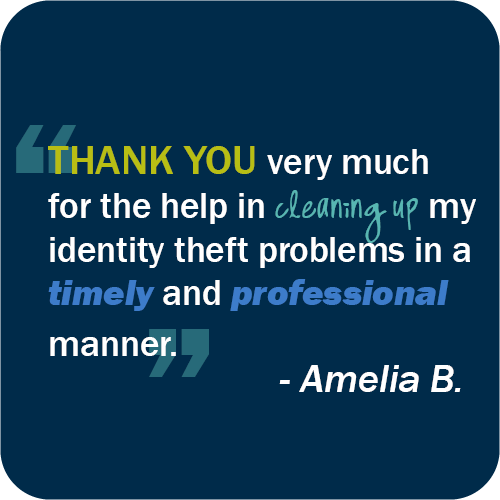
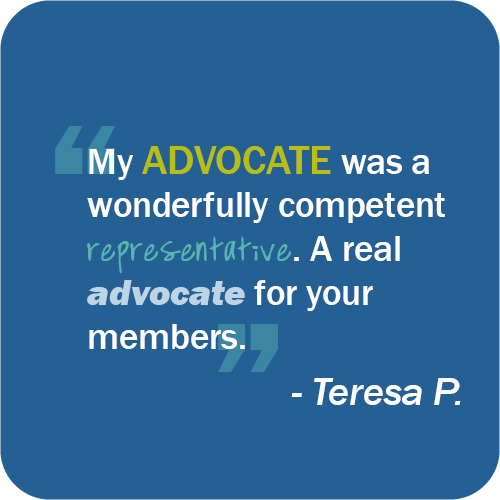
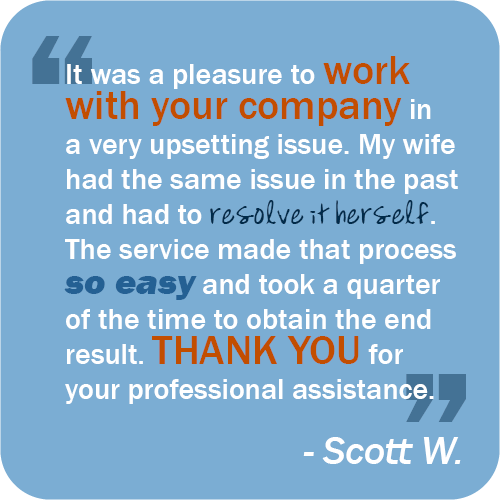
Testimonials
FCCU Fraud Resources
Looking for additional fraud resources? FCCU has a list of free fraud tips, podcasts and other fraud prevention resources available.
1Identity theft insurance is underwritten by Lyndon Southern Insurance Company, a member of the Fortegra family of companies. The information provided is a program summary. Please refer to the Identity Theft Expense Reimbursement Evidence of Coverage forms for additional information including details of benefits, specific exclusions, terms, conditions & limitations of coverage. Coverage is currently not available to residents of NY & may not be available in other U.S. territories or jurisdictions in the future.
2Identity Theft Insurance underwritten by insurance company subsidiaries or affiliates of American International Group, Inc. (AIG). The description herein is a summary and intended for informational purposes only & does not include all terms, conditions & exclusions of the policies described. Please refer to the actual policies for terms, conditions, & exclusions of coverage. Coverage may not be available in all jurisdictions.
3Offer valid 09/01/2025 – 12/31/2025. To qualify, member must enroll in IDSafeChoice during promotional period and maintain an active subscription for three consecutive months. A statement credit will be applied to member’s primary checking account within 30 days after the completion of three-month period. Existing IDSafeChoice subscribers are not eligible for this offer. Limit one statement credit per new paid subscriber. Checking account must be in good standing at the time credit is applied, see terms and conditions of membership for more information. Offer is subject to change or withdrawal at any time without notice. Information provided will be used solely for enrollment purposes in accordance with FCCU’s Privacy Policy. Qualifications and limitations apply.
Use this calculator to determine your projected earnings from our Kasasa Cash account. Move the sliders or type in the numbers to see your potential rewards.
- Estimated Annual Rewards $0
- Estimated monthly dividends earned* $0
- Monthly ATM fees refunded**$0
This calculator compares the costs of buying or leasing a vehicle. There are three sections to complete, and you can adjust and experiment with different scenarios.
- Net cost of buying $0
- Net cost of leasing $0
A fixed-rate, fixed-term CD can earn higher returns than a standard savings account. Use this calculator to get an estimate of your earnings. Move the sliders or type in numbers to get started.
- Total value at maturity $0
- Total dividends earned $0
- Annual Percentage Yield (APY)0.000%
Whether it's a down payment, college, a dream vacation...a savings plan can help you reach your goal. Use the sliders to experiment based on length of time and amount per month.
- Monthly deposit needed to reach goal $0
This calculator can help you get a general idea of monthly payments to expect for a simple loan. Move the sliders or type in numbers to get started.
- Estimated monthly payment $0
- Total paid $0
- Total interest paid $0
Kasasa Cash*
| Balance | Rate | APY |
|---|---|---|
| 0 - $25,000 | 2.47% | 2.50% |
| $25,000+ | 0.15% | 2.50% to 0.62% |
| All balances if qualifications not met | 0.02% | 0.02% |
Qualifications to Earn Rewards
Enrollments must be in place and all of the following transactions and activities must post and settle to your Kasasa Cash® account during each Monthly Qualification Cycle:
- At least 12 debit card purchases
- Be enrolled in and agree to receive eStatements
- Be enrolled in and log into online banking
If you don’t qualify this monthly qualification cycle, your account is still free. Plus, you’ll still earn the base interest rate for your account. Then, next month, you can get right back to earning your full rewards.
Kasasa Saver*
| Balance | Rate | APY |
|---|---|---|
| 0 - $25,000 | 0.25% | 0.25% |
| $25,000+ | 0.15% | 0.25% to 0.17% |
| All balances if qualifications not met | 0.02% | 0.02% |
Qualifications to Earn Rewards
Qualifying for your Kasasa Cash or Kasasa Cash Back® rewards automatically qualifies you for the highest Kasasa Saver rate, too. Enrollments must be in place and all of the following transactions and activities must post and settle to your Kasasa Cash or Kasasa Cash Back account during each Monthly Qualification Cycle:
- At least 12 debit card purchases
- Be enrolled in and agree to receive eStatements
- Be enrolled in and log into online banking
If you don’t qualify this monthly cycle, your account is still free and you’ll still earn the base interest rate. Plus, you’ll get right back to earning your rewards the very next month.
APY = Annual Percentage Yield. Rates and APYs accurate as of 1/1/2021. Rates and rewards are variable and may change after account is opened. Fees may reduce earnings.